







AORTA News: October 26th, 2026
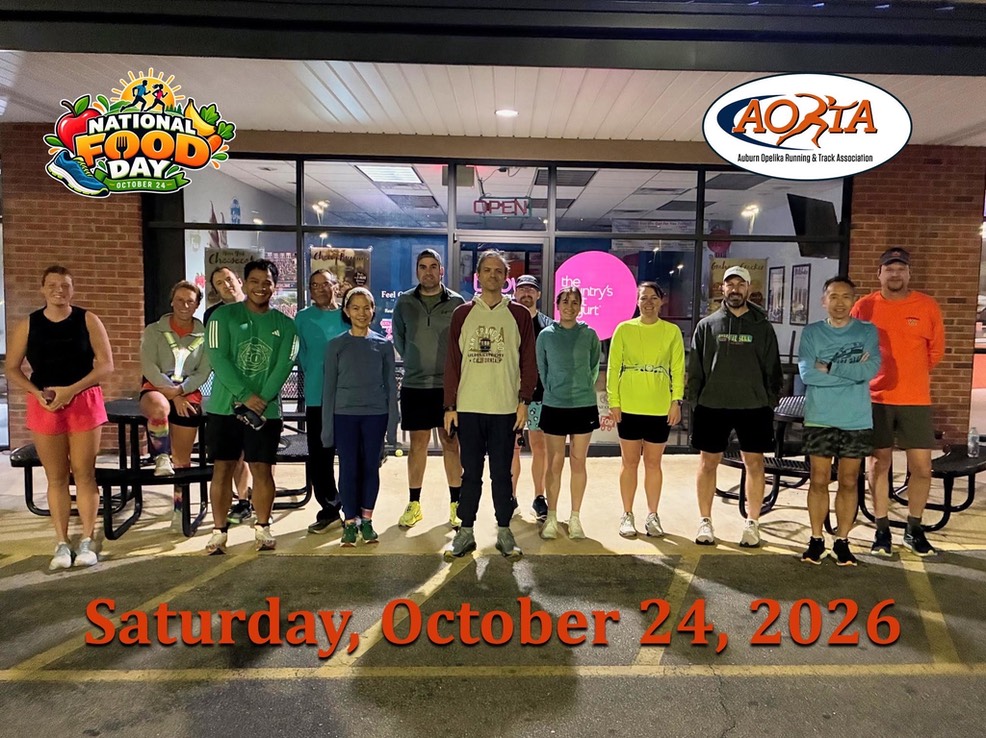
Happy National Food Day Group Run!
Run. Eat. Football. Repeat. A perfect fall Saturday in Auburn! War Eagle!
Race Volunteers Needed!
As a runner, we know your time is valuable. But if you have a couple hours to spare, we could use your help for one of the upcoming AORTA supported or directed races! Assisting at a local race is a fun and rewarding experience. You are surrounded by health conscious individuals that, like you, are motivated fitness enthusiasts and appreciate the effort of volunteers.
Upcoming Local Race This Week!
Beat Bama Food Drive 5K
- When: Sunday, November 01, 2026
- Time: 2:00 PM (1-Mile), 2:30 PM (5K)
- Where: Cater Lawn, Auburn University
- Fee: $38 (5K), $18 (1-Mile)
- Description: The Beat Bama Run Fest is a charity color run benefiting the Food Bank of East Alabama. It offers a 5K race and a one-mile fun run for participants of varying fitness levels, encouraging community involvement by collecting non-perishable food donations. Pre-registration is encouraged to save on fees, and the event includes water stops, refreshments, and children's entertainment, making it a well-rounded experience focused on fitness, community engagement, and philanthropy for participants of all ages.
Upcoming Local Races

Unity Wellness Center AIDS Day Run/Walk
- When: Saturday, November 14, 2026
- Time: 8:00 AM (1-Mile), 8:30 PM (5K)
- Where: Town Creek Park, Auburn, AL
- Fee: $5 (1-Mile), $5 (5K) (t-shirt $20)
- Description: Join us for the 9th Annual Unity Wellness Center World AIDS Day Run/Walk, featuring a $5 fee for both the 5K and 1-mile events (with an option to add a shirt for $20). Age group awards will be given, and there will be a raffle and refreshments for the whole family. The 1-mile walk starts at 8:00 am (untimed), and the 5K timed race begins at 8:30 am. This event commemorates World AIDS Day, a global day of unity against HIV, and supports Unity Wellness Center's vital services, including HIV testing, counseling, medical care, case management, and prevention education.

Moore’s Mill Turkey Trot
- When: Thursday, November 26th, 2026
- Time: 8:00 AM
- Where: Moore’s Mill Club, Auburn, AL
- Fee: $35 includes t-shirt
(Register by Nov 17th for guarenteed t-shirt)
- Description: The annual Moore’s Mill Club Turkey Trot is something NOT to be missed! Taking place Thanksgiving Day morning, it has become a fun family tradition for many. Runners, joggers & walkers - this fun run is for EVERYONE!
- Last year we raised $40,000 for the Food Bank of East Alabama!
- $1 Donation Equals 7 Meals!

Active Auburn Jingle Jog & Santa Stroll
- When: Saturday, December 05, 2026
- Time: 6:30 AM (1-Mile), 7:00 AM (5K)
- Where: Toomer’s Corner, Downtown Auburn
- Fee: $20 (Fun Run), $30 (5K)
*Prices increase after November 26.
- Description: The Jingle Jog 5k and Santa Stroll Fun Run are here again – so pull out those Santa hats and ugly sweaters! Join Active Auburn on Saturday, December 5th at 6:30 a.m. as we ring in the holiday season in style! The Santa Stroll Fun Run (1 mile) will begin at 6:30 a.m. at Toomer’s Corner and the Jingle Jog 5k will begin at 7:00 a.m. at Toomer’s Corner.

Auburn Toys for Tots 5K/10K and Fun Run
- When: Saturday, December 12, 2025
- Time: 8:00 AM (1-Mile), 8:30 AM (5K/10K)
- Where: Town Creek Park
- Fee: $20 (1-Mile), $30 (5K), $40 (10K)
** Prices increase after October 15th
- Description: Mark your calendars and start the holiday season in a festive mood with a 10K, 5K, or 1-Mile! All participants are asked to bring a new, unwrapped toy. to be distributed to children in need. This year, Toys for Tots donations are especially important. the weak economy has caused many to lose jobs, be furloughed, or be forced out of work for long periods of time. Families in these difficult situations desperately needed a little extra holiday cheer this holiday season. The Toys for Tots race will help bring people together during the holidays. All participants who register online by November 30th will receive a souvenir festive t-shirt!
Weekly Whimsy
How Weak Glutes Strain Your Lower Back
Lola Marks, The Running Week
Strong glutes are important for preventing lower back pain during workouts, but they require targeted activation to wake up.
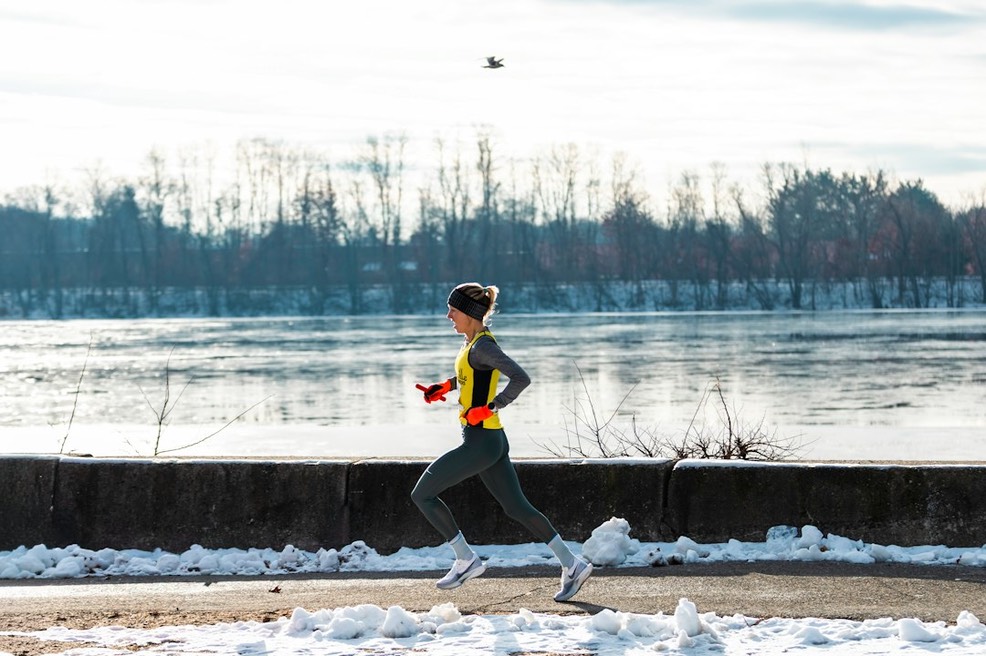
You ease out of the car after your long run, and there it is again. That tight, nagging ache in your lower back that stretching and foam rolling never quite fix. You did everything right, but the real culprit may be hiding somewhere you’d never think to look.
A Common Problem for Runners
If that ache sounds familiar, you have plenty of company at the start line of every Saturday group run. Yale Medicine reports that at least 50% of regular runners get hurt in a typical year, and some estimates run even higher. You probably play detective, blaming your mileage, your shoes or even your age. Meanwhile, the real source could be a muscle group quietly sitting right behind you.
Why Your Glutes Go Quiet Before You Even Lace Up
Picture your day before you ever step outside, with a commute, a desk shift and an evening on the couch. Research suggests adults average over 10 hours a day of sedentary time, which probably gives your glutes plenty of chances to switch off. When the muscles underperform, you might feel it as a sluggish push-off, a hamstring that works overtime or a lower back that takes over once the miles pile up. That flat, heavy-legged feeling during your first easy mile might even trace back to hips that haven’t woken up yet.
The Muscle Imbalance Behind Your Back Pain
Your spine relies on a team to keep you upright through every stride. Your glutes are part of that support team because they help stabilize your hips and pelvis each time your foot hits the ground. While your bones, discs and ligaments work as static stabilizers, your muscles and tendons stabilize your spine dynamically as you move. When your gluteal muscles are weak, your hips and pelvis have less support, and your lower back may pick up the slack with every footstrike. Tight or weak muscles can place extra strain on the lower back and neck, which may explain why that ache creeps in late in your long run.
Why Hip Strength Matters During Recovery
When your lower back flares up, you naturally want to baby that sore spot with heat, stretching and extra rest days, but giving attention to your hips and glutes is important too. Hip-strengthening can support pain relief and strength gains, which makes your hips and glutes worth attention when lower-back discomfort starts interfering with training. When you’re weeks out from race day with a cranky back, a few weekly hip sessions might help you return to your tempo runs sooner.
How to Start Building Glute Strength Into Your Routine
The good news is that your training plan can stay mostly intact, because small additions sometimes make a real difference. A few minutes before your runs and a sprint session or two each week are all it takes to get started.
Activate Your Glutes Before You Run
Think of pre-run activation as a warmup for your gluteal muscles, much like the easy strides that loosen up your legs before a workout. A few minutes of body weight movement before you head out the door means these key muscles can engage from the very first step, so try rotating through these general categories:
• Glute bridges: These floor-based lifts switch on the muscles at the back of your hips before they have to carry you through the miles.
• Banded walks: Side-stepping with a light resistance band gives this crucial area a focused wake-up call before your run.
• Standing activations: Moves like leg swings and hip hinges ask your glutes to fire while you’re upright, just as they will out on the road.
Add Sprint Training to Build Power
Sprinting switches your glutes on in a big way because it uses fast-twitch muscle fibers, which build glute strength and power. If sprinting is new for you, start with short, relaxed efforts and build gradually so your back, hips and hamstrings have time to adapt. Try adding one of these options to your weekly schedule:
• Hill sprints: Charging up a short hill makes a great finisher to an easy run, and the incline challenges your muscles in a fresh way.
• Post-run strides: A handful of relaxed accelerations at the end of an easy run lets you practice quick turnover while your legs are warm.
• Short-interval efforts: Swapping part of a weekly speed session for brief, hard efforts with full recovery jogs adds sprint work while keeping your mileage steady.
A Growing Running Community
Lower-back aches can feel isolating, but you are training alongside a growing community of runners managing the same small setbacks. U.S. marathon participation in 2024 landed 5% above pre-pandemic levels, so more runners are lining up for the same finish line you’re chasing. If you strike up a conversation with fellow runners after your next group run, you’ll likely hear the same story about a grumpy lower back. It’s a problem nearly every runner can relate to, and someone in your crew may have a glute routine worth borrowing. With so many runners chasing big goals, your training block deserves protection from avoidable setbacks. Building glute strength now helps keep lower back pain from sidelining your peak weeks.
Give Your Back the Support It’s Been Missing
Small habits, like a quick bridge sequence before your run or a set of strides after it, can help protect the training goals you’ve worked so hard to build. Your lower back carries you through every mile, and stronger glutes will share that load.
Link to article: https://tinyurl.com/2szjyddz

Quote of the Week
Try and Fail
BUT
Don’t Fail to Try!
Anonymous
Video of the Week
From 30 Seconds to My 2nd Marathon! (23:41)
Cassie weighed 230 pounds, couldn't run 30 seconds without feeling like her lungs were going to give out. Six years later she's training for my second marathon.
** AORTA provides this informational video to its members as a courtesy and does not endorse any particular product, process, or service.
Ongoing Events

RunGo For Turn-By-Turn Directions!
RunGo provides turn-by-turn navigation allowing you to just enjoy your runs without having to think about looking for street names and when you may have to turn next. Other great features include, audio cues with your running stats, split updates, the ability to share your runs via social media, and create new routes. Another great feature of the app is the ability to work offline. You can create and download your routes ahead of time, before your run so you don’t have to use data during your run.
Race Volunteers Needed!
As a runner, we know your time is valuable. But if you have a couple hours to spare, we could use your help for one of the upcoming AORTA supported or directed races! Assisting at a local race is a fun and rewarding experience. You are surrounded by health conscious individuals that, like you, are motivated fitness enthusiasts and appreciate the effort of volunteers.

Water Stop Volunteers Needed
Water stop signs and coolers are available at the following location: 1536 Professional Parkway, Auburn, AL. (Thank you Adahli Massey!). Coolers and signs can be picked up Monday-Thursday from 8AM-4PM and on Fridays from 8AM-12 noon. Items are in the room next to the back door. If you are unable to pick up supplies on these dates/times, e-mail clemster@aol.com to make alternative arrangements (we deliver!).
Forward any comments to the webmaster